Get Free Consultation!
We are ready to answer right now! Sign up for a free consultation.
I consent to the processing of personal data and agree with the user agreement and privacy policy

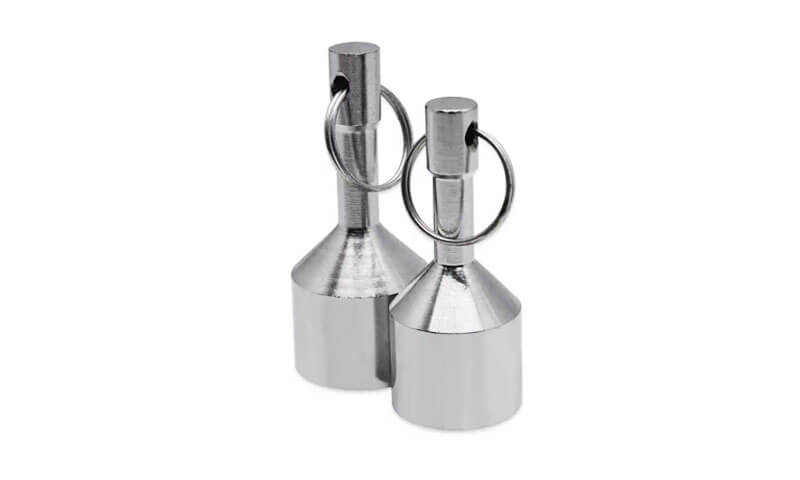
At first glance, the question “Is steel magnetic?” seems trivial. A paperclip sticks to a refrigerator magnet – so yes, steel is magnetic.
But ask an engineer working with stainless steel pipeline components, and the answer becomes: it depends.
Steel is not a single material; it is a family of iron‑carbon alloys with widely varying microstructures.
Some steels are strongly ferromagnetic, others are completely non‑magnetic, and a few fall in between.
This article dissects the magnetism of steel from five angles: fundamental physics, crystallography, alloy composition, processing history, and practical testing.
By the end, you will understand not only whether a given steel is magnetic, but why – and how to predict or modify that behaviour.
Steel is usually magnetic because its most common metallurgical phases are built on iron, and iron is a ferromagnetic element in its body-centered crystal forms.
In practical terms, steel’s magnetic response is controlled by crystal structure, electron spin alignment, and phase balance.
The more a steel contains ferritic or martensitic structure, the stronger its attraction to a magnet will generally be.

The magnetic behavior of steel is not random. It is rooted in the way iron atoms are arranged in the crystal lattice and in how their unpaired electrons interact.
The most important magnetic phase in ordinary steel is alpha ferrite, which has a body-centered cubic (BCC) crystal structure.
In this arrangement, iron atoms allow magnetic domains to align easily, so the material shows strong ferromagnetism.
That is why carbon steel, low-alloy steel, and many structural steels are strongly attracted to a magnet.
By contrast, austenite has a face-centered cubic (FCC) structure.
This tighter atomic packing changes the electron arrangement and prevents long-range magnetic domain alignment in the same way as ferrite.
As a result, austenitic steel is typically weakly magnetic or nearly non-magnetic in the annealed condition.
When steel is quenched, austenite can transform into martensite, a body-centered tetragonal structure derived from the BCC family.
Martensite remains magnetically responsive, which is why hardened steels are still magnetic and often even more strongly so than the austenitic condition they came from.
At room temperature, most common steels contain either ferrite, martensite, or a mixture of both. These phases preserve the domain alignment needed for ferromagnetism.
That is why ordinary structural steel, tool steel, and many alloy steels respond strongly to a magnet without any special treatment.
Austenitic steels are the main exception, but even they are not always completely non-magnetic.
Cold working, forming, or severe deformation can create local martensitic transformation and make them partially magnetic.
| Magnetic behaviour | Description | Occurs in steel? |
| Ferromagnetic | Strong attraction; retains magnetism (hysteresis) | Yes – most carbon steels, ferritic stainless, martensitic stainless |
| Paramagnetic | Weak, temporary attraction; no hysteresis | Yes – austenitic stainless steels (e.g., 304, 316) |
| Antiferromagnetic | No net magnetisation; magnetic moments cancel | No |
| Diamagnetic | Very weak repulsion; all materials have this | No (overwhelmed by stronger effects in steel) |
Thus, the practical answer “is steel magnetic?” is: ferromagnetic steels are magnetic; paramagnetic steels are nearly non‑magnetic to casual observation.
Magnetism in steel also depends on temperature. Every ferromagnetic material has a Curie temperature, above which thermal agitation overcomes magnetic domain ordering and the material becomes paramagnetic.
For pure iron, the Curie temperature is about 770°C. Above this point, iron temporarily loses its ferromagnetism.
When it cools back down, magnetism returns without any permanent compositional change.
This explains a useful industrial observation: steel may appear non-magnetic while it is hot during forging, heat treatment, or austenitizing, but regain its magnetic behavior after cooling.
The magnetic change is therefore reversible and temperature-driven, not necessarily a sign of chemical change.
In practical engineering terms, the more a steel family contains ferrite or martensite, the more magnetic it tends to be.
The more it is stabilized in an austenitic structure, the weaker its magnetic response usually becomes.
| Steel family | Common grades / types | Typical magnetic behavior | Technical note |
| Carbon steel | AISI 1010, 1018, 1020, 1045, 1095 | Strongly magnetic | Most carbon steels contain ferrite and/or martensite, so they are usually strongly attracted to a magnet. |
| Low-alloy steel | 4140, 4340, 8620, 4130 | Strongly magnetic | Alloying does not remove magnetism unless it stabilizes austenite strongly; most low-alloy steels remain magnetic. |
| Alloy steel | Chromium-molybdenum steel, nickel-chromium steel, structural alloy steel | Usually magnetic | “Alloy steel” is a broad category; most grades are still ferritic or martensitic and therefore magnetic. |
| Structural steel | ASTM A36, Q235, S235, S355 | Strongly magnetic | Widely used structural steels are generally ferritic and respond clearly to magnets. |
| Tool steel | D2, O1, A2, H13, W1 | Strongly magnetic | Tool steels are often magnetic even after heat treatment because martensite is a dominant phase. |
Spring steel |
5160, 1075, 1095 spring steel | Strongly magnetic | High-carbon spring steels are typically martensitic after heat treatment and remain strongly magnetic. |
| Bearing steel | AISI 52100 | Strongly magnetic | High-carbon chromium bearing steel is usually magnetic due to its martensitic matrix. |
| Weathering steel | Corten A, Corten B | Strongly magnetic | Weathering steels are still iron-based structural steels and retain strong magnetic response. |
| Electrical steel / silicon steel | M19, M27, 1008 electrical steel | Magnetic, often engineered for controlled magnetism | These steels are specifically designed for magnetic performance in motors and transformers. |
| Ferritic stainless steel | 409, 430, 439 | Magnetic | Ferritic stainless steels remain magnetic because their structure is ferritic, not austenitic. |
Martensitic stainless steel |
410, 420, 440C | Strongly magnetic | These grades are magnetic and hardenable. |
| Duplex stainless steel | 2205, 2507 | Magnetic | Duplex steels contain both ferrite and austenite, so they show noticeable magnetism. |
| Austenitic stainless steel | 304, 316, 316L, 321 | Usually weakly magnetic to nearly non-magnetic | In annealed condition they are typically non-magnetic or only slightly magnetic; cold work can increase magnetism. |
| Precipitation-hardening stainless steel | 17-4PH, 15-5PH, 13-8Mo | Usually magnetic | These grades often show magnetic response because of their mixed structure and heat-treatment state. |
Steel’s magnetic response is not fixed. It can change with composition, heat treatment, deformation, phase balance, and temperature.
In practical terms, a steel that appears strongly magnetic in one condition may become weaker, stronger, or locally variable in another.
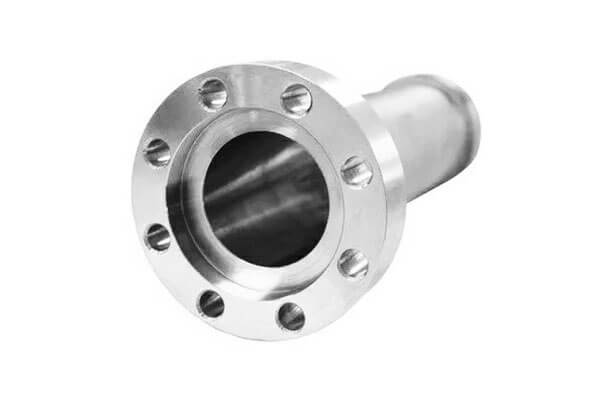
The alloying elements in steel influence which phases form and how stable they remain.
That is why a plain carbon steel is usually strongly magnetic, while an austenitic stainless steel with substantial nickel content may be only weakly magnetic.
Heat treatment changes the internal crystal structure of steel, and that directly changes magnetism.
This is why the same alloy may show different magnetic behavior before and after heat treatment.
Mechanical deformation can increase magnetism, especially in austenitic stainless steels.
Bending, rolling, stamping, drawing, or heavy machining can cause part of the austenite to transform into martensite.
The result is a steel that becomes more magnetic after forming than it was in the annealed state.
This effect is often most noticeable in:
Steel’s magnetic response depends heavily on how much ferrite, martensite, and austenite it contains.
This is especially important in duplex stainless steel, where the balance between ferrite and austenite determines the overall magnetic behavior.
Since duplex steels contain a ferritic fraction, they are usually magnetic even though they are not as strongly magnetic as plain carbon steel.
Temperature can temporarily suppress magnetism in ferromagnetic steel.
Above the Curie temperature, the ordered magnetic domains lose alignment and the material becomes paramagnetic.
Once the steel cools below that threshold, magnetism returns.
That means hot steel may appear non-magnetic during forging or heat treatment, but that does not mean the material has stopped being steel or has permanently lost magnetic properties.
The change is reversible and thermal.
Surface grinding, welding, shot peening, machining, and residual stresses can create local variation in magnetic response.
In some steels, the surface layer can become more magnetic than the core if the surface undergoes strain-induced transformation or localized phase change.
This is one reason a magnet test may show uneven attraction across the same part.
Steel magnetism is not just a laboratory curiosity. In real engineering, it influences assembly behavior, sensing compatibility, recycling, inspection, electrical interaction, and environmental suitability.
The right choice is therefore not “magnetic steel versus non-magnetic steel” in a simple sense, but the right steel family for the magnetic requirement of the application.
Strongly magnetic steels are usually the best choice when magnetic response is useful in the application itself.
In these cases, strong magnetic response helps with handling, separation, and fixture retention.
Carbon steel, low-alloy steel, tool steel, and ferritic or martensitic stainless steel are often preferred because they combine mechanical utility with reliable magnetic attraction.
Some applications demand very weak magnetic response or near-non-magnetic behavior.
In those cases, annealed austenitic stainless steel is usually the first material family to evaluate.
In these situations, even slight magnetism can interfere with function.
Austenitic grades such as 304 and 316 are commonly selected because they are usually weakly magnetic in the annealed condition.
However, the design must account for the fact that cold work can increase magnetism, so processing history matters as much as nominal grade.
Some applications do not require maximum magnetism or minimum magnetism. They need predictable, moderate magnetic behavior.
Duplex stainless steel is a strong example. It offers high strength and corrosion resistance while remaining magnetic because of its ferritic fraction.
This is useful when the part must resist chloride stress-corrosion cracking and still retain good mechanical performance.
The magnetic response is not the design goal, but it is a predictable consequence of the microstructure.
Many refrigerator doors are made of ferritic stainless steel (e.g., 430), not austenitic.
Ferritic stainless is cheaper, has good corrosion resistance for indoor use, and is magnetic – which conveniently allows magnets to stick.
If your fridge were made of 304, magnets would not stick.
Yes, but with caveats:
No. Even austenitic stainless has paramagnetic permeability >1. In strong magnetic fields (e.g., MRI machines), they produce a small but measurable attraction.
For applications requiring extremely low magnetic susceptibility (e.g., NMR tubes), special alloys like MP35N or titanium are used.
Yes, but with limitations:
“Is steel magnetic?” cannot be answered with a simple yes or no. The correct answer is:
Steel is magnetic if its crystal structure at room temperature is body‑centred cubic (BCC) or body‑centred tetragonal (BCT).
It is non‑magnetic (paramagnetic) if its structure is face‑centred cubic (FCC).
Understanding the metallurgy behind magnetism allows engineers to select the right steel for applications ranging from magnetic chucks (where strong ferromagnetism is needed) to MRI‑compatible surgical tools (where even trace magnetism is forbidden).
Always test with a calibrated method, and never rely on a simple magnet test alone for critical material verification.
Local delta ferrite precipitates inside welding heat-affected zone during uneven cooling, generating faint partial magnetism near weld seams; overall base plate still retains non-magnetic feature.
Nickel stabilizes FCC austenite lattice which disrupts ordered magnetic domain arrangement; low chromium-nickel formulation cannot suppress BCC ferrite formation with inherent ferromagnetism.
Deformation-induced partial magnetism does not change alloy’s chromium passive film formation ability;
corrosion resistance remains consistent with original grade specification regardless of minor local magnetic variation.
Yes, but not common. Some high‑manganese, high‑aluminium steels (so‑called “non‑magnetic” actually) can be ferromagnetic at very low temperatures.
At room temperature, no stable austenitic commercial stainless steel is ferromagnetic.
